
CHAPTER 6
0638 hours, March 12, 2526 (military calendar)
Charon-class Frigate Bellicose
Deep Space, Little Nelek Nebula, Grenadi Sector
The envoys sat hip-to-hip at the steel mess table, only a bit blurry-eyed from the welcome party a few hours before, the men freshly shaven and the women in light makeup or none at all. Most were dressed in what twenty-year-old Petora Zoyas privately called “Insurrection chic”—worn fatigues with cutoff sleeves or no collar or both, often with too many buttons undone and a flask cap peeking out of a breast pocket. The style was more statement than uniform, an assertion that they were warriors without being soldiers and didn’t take orders from anyone—least of all the grim-faced former general standing at the far end of the Bellicose’s cramped wardroom.
Tall and lean with salt-and-pepper hair, Harper Garvin wore pressed gray slacks and a cream bush shirt with matching tie. There were no stars on his collar tips, but otherwise his attire could have been a United Rebel Front version of the Service B uniform he had worn as a major general in the UNSC Marine Corps. If he realized how his soldierly dress undermined his prestige in the eyes of the envoys he hoped to unite into a coalition, he showed no sign of it.
“Thanks to all for rolling out for an early meeting. I know it wasn’t easy after last night’s fun.” Garvin paused for a round of chuckles that failed to come, then turned to the woman seated directly to his left. “And thank you, Captain Castilla, for hosting us.”
Castilla dipped her head in acknowledgment. “I’m happy to do this, General.” An almond-eyed woman in her late forties, Lyrenne Castilla was the commander and owner of the privateer frigate Bellicose. She had silky black hair, a high-cheeked face with a thin nose, and a sure voice that instantly commanded the respect Garvin was still struggling to win. “Our brothers and sisters in the Insurrection need to understand what is happening here in the Outer Colonies.”
A general murmur of agreement rose. Everyone in the compartment had heard reports of the unsettling events: massive fleet movements . . . planets going silent with no explanation . . . unprovoked attacks by odd-looking ships . . . automated cargo pods full of half-dead refugees. But confirmed facts were in short supply, so the slipspace lanes were filled with wild rumors: the UNSC was annihilating insurrectionist-friendly worlds . . . an incurable plague was being spread by a fleet of research vessels . . . a host of rampant AIs had declared war on humanity. Most far-fetched of all was a claim that the UNSC had discovered a civilization of defenseless aliens and was trying to eradicate them.
But instead of turning their attention back to Garvin, who still seemed half-UNSC in his manner and dress, the envoys continued to look toward Castilla. She was a rebel legend, a female captain with a mysterious past who supplied a good part of the Insurrection by snatching cargo pods from transport routes. There were whispers that she’d once seduced and married a UNSC captain in order to spy on him, and she’d been pregnant with his child when forced to fake the destruction of her vessel after ONI had discovered her true identity. Petora didn’t know how much of the story was true—few people did—but the Bellicose always operated under a false name to hide its identity, and there was a hardness in Castilla’s patrician features that suggested she was capable of anything.
When Castilla realized the envoys were still looking at her instead of Garvin, she turned and fixed her own gaze on the general—a deft maneuver that left no room to doubt her support for his leadership. Presumably he had a few qualities not readily apparent to Petora.
“The floor is yours, General,” Castilla said. “What are you hearing from your spy in FLEETCOM?”
Garvin’s eyes widened, but if Castilla had revealed too much about his source, her mistake worked in his favor. The envoys finally began warming to him, regarding him with something approaching respect, and even Petora began to see him in a new light. Given the current uncertainty about what was happening in the Outer Colonies, good intelligence bought a lot of goodwill. In fact, Petora was counting on it.
“In brief,” Garvin began, “humanity is under attack by an alien empire, an alliance of different species who call themselves the Covenant. At the moment, the invasion is limited to the Polona, Grenadi, and Vevina sectors. But their military technology is vastly superior to ours, and FLEETCOM has no expectation of being able to contain them.”
The envoys studied Garvin in wary silence, until a square-jawed woman at Petora’s end of the table asked, “You mean they’re real?”
“The aliens? Of course they’re real.” Garvin furrowed his brow. “Considering what happened on Harvest, Ms. Ander, you should know that better than anyone.”
Ander shook her head. “Our intelligence hacks didn’t think that incident was really aliens attacking.” Nanci Ander was the daughter of Jerald Ander, who had been the secret leader of the Secessionist Union on Harvest until his assassination in 2502. “We thought it was a ruse to empty the planet so the Colonial Military Authority could recolonize it with a rebel-free population.”
“That seems a little paranoid, don’t you think?” asked Reza Linberk. A blond, blue-eyed woman with high cheeks and a delicate jaw, Linberk was just a few years older than Petora—and already the first deputy of the Venezian Militia. “Razing an entire planet to flush out a few insurgents is a bit over the top. Even the UNSC wouldn’t go that far.”
“You haven’t seen what the Freedom League is fighting on Jericho VII right now.” The speaker was Bahito Noti, a slender man with a dark complexion and fierce eyes. “We’re not sure whether they’re people or something else, but they’re killing machines. They’ve just about wiped us out.”
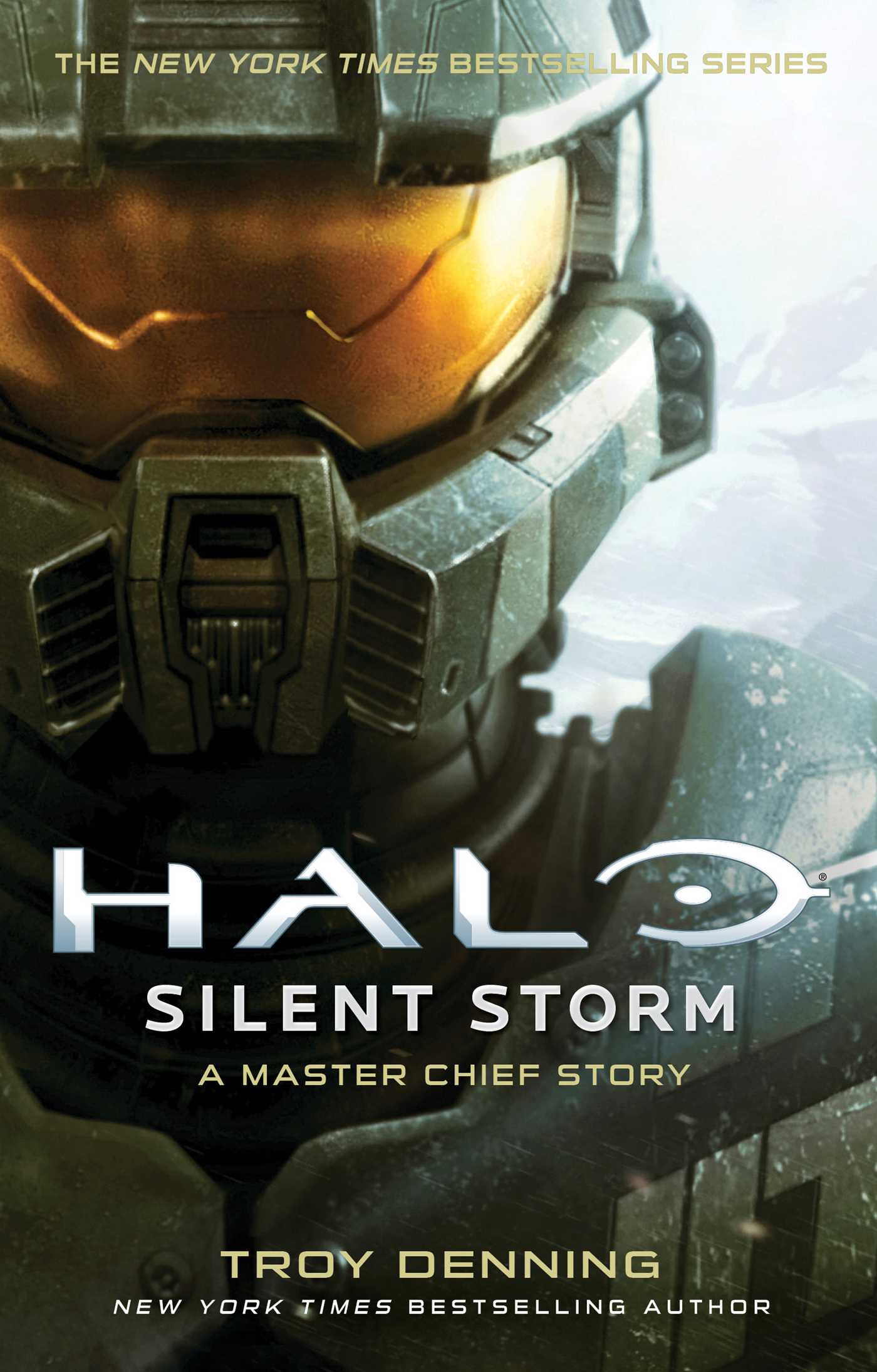
“Huge guys in power armor?” Petora asked. As the envoy for the recently established Gao Liberation Force, she had been instructed to secure a leadership role for her group in the developing coalition—and Noti had just given her the perfect opportunity. “Blocky helmets with mirrored faceplates, just about the fastest thing you’ve ever seen on two legs?”
Noti’s brow rose. “You’re fighting them too?”
“Fortunately, no,” Petora said. “But the Gao Liberation Force has developed some intelligence on them. They’re called Spartans, and they might as well be machines. According to our information, they’re biologically enhanced humans who have been training together for years, and they’ve just been equipped with advanced power armor. Apparently, ONI considers a single soldier the equivalent of twenty-five ODSTs.”
“How do you know all that?” Castilla’s tone was somewhere between doubting and resentful—perhaps because she recognized the advantage that the GLF’s intelligence source would give Petora in establishing the pecking order in a new coalition. “That’s some pretty specific intelligence.”
Petora flashed a superior smirk. “General Garvin isn’t the only one with inside information.” She turned to Garvin himself. “The GLF has an agent in Task Force Yama.”
“Which is?” Garvin asked.
“An all-prowler assault wing operating independently out of Battle Group X-Ray.” As Petora spoke, Garvin looked a bit more fascinated with each word. “Their mission is to cripple the alien invasion fleet by using space assault teams to board key vessels and detonate nukes within the hulls.”
“That’s a very desperate plan.” Castilla thought for a moment, then turned to Garvin and added, “And just the kind of thing Preston would dream up with his back to the wall.”
Garvin nodded. “You would know better than me.”
Petora was flabbergasted at the exchange. Could Preston Cole be the UNSC officer that Castilla had seduced and married? The familiarity in her voice when she said his name certainly supported the possibility.
Castilla noticed Petora gawking at her and returned the smirk. “The rumors are true,” she said. “Yes, I was once married to Vice Admiral Cole—though he was only a captain at the time.”
What Petora wanted to ask was whether Cole’s child, who would be more than twenty by now, was a crewmember aboard the Bellicose. But insurrectionists did not share information about their children with people they’d just met, and Petora would not win anyone’s confidence if it seemed like she was prying. So she swallowed her pride and tried to look impressed.
“How lucky for us.” Petora was careful to put some enthusiasm in her voice. Castilla’s past with Cole would give her a lot of influence over how the GLF’s intelligence was viewed, and that meant Petora needed her as an ally. “It would be great if you could help interpret our agent’s field reports.”
“I’ll be happy to offer my opinion,” Castilla replied, almost warmly. “What else has the spy told you?”
“Communications are limited,” Petora said. “But we do know that Admiral Cole has turned mission planning over to the task force commanders. They hope to engage the Covenant fleet at Biko—”
“Biko?” It was a barrel-chested man with a long red beard—Erland Booth of the Biko Independence Army—who blurted the question. “That can’t happen!”
“I doubt anyone here has a say in the matter, Commandant.” Garvin turned to Petora and raised a querying brow. “Do they?”
“Not anyone the GLF knows, General. Our agent isn’t that high up.” In truth, the spy’s identity was known only to Arlo Casille, a thirty-year-old Ministry of Protection clerk who was running half of the GLF out of his cramped little office, right under the CMA’s nose. But she didn’t want to weaken her position by admitting there were some secrets that Arlo didn’t trust her with. She shot a sympathetic look in Booth’s direction, then added, “Perhaps Biko won’t suffer much. If the UNSC plan works, the battle should be in orbit.”
“That’s a big if,” Booth grunted.
“Not as big as you may think. The Spartans have already boarded and destroyed two vessels themselves.” Petora did not mention that, at Netherop, the Spartans had succeeded despite a deliberate attempt to get them killed. Until she knew that Garvin and the other envoys supported the GLF tactic of using the aliens to eliminate the Spartans, some things were better left unsaid. “And in this operation, they’ll be using three teams supported by the 21st ODST Space Assault Battalion.”
“The Black Daggers.” Garvin seemed more impressed by the ODSTs than by the Spartans. “They’re a dangerous outfit. They captured our resupply depot at Bomogin before anyone realized they were coming.”
“Which is why our agent thinks the attack may work.” Petora turned back to Booth. “Whether that would save Biko or get it annihilated is anyone’s guess.”
“And not a question we should be asking,” said Reza Linberk.
Booth’s face grew as red as his beard. “Why the hell not?”
“Because we have no control over the situation,” Linberk replied. Venezia was only nine light-years from Gao, so Petora had worked with Linberk on a few joint missions. The woman was a cunning foe and a dangerous ally, someone who was so utterly cold-hearted that she would betray even her closest comrade to complete an assignment. “What we need to be discussing is how the Insurrection can benefit from the situation.”
“Benefit?” Nanci Ander was aghast. “From an alien invasion?”
“Exactly,” Linberk said. “If we coordinate our reaction, there are any number of ways to turn this to our advantage.”
“I am in complete favor of this,” said Nemesio Breit. The vice counselor of the People’s Occupation on Reach, he was a tall man with a gaunt build and—as someone who lived on a planet with a major UNSC base—an infinite hatred of colonial authority. “We need to prepare now, so we’re ready to finish the Unified Earth Government after the Covenant has crippled it.”
“What makes you think we’ll be around as well?” Castilla asked. “As far as we know, the aliens aren’t playing favorites here.”
“Not so far,” Garvin agreed. “According to my sources, they glassed the Galodew Emancipation base on Redstow VI. The entire cadre was wiped out.”
“What do you mean, glassed?” asked Ander.
“Orbital plasma bombardment,” Petora said. “So hot it fuses a planet’s surface silica. The ground literally turns into glass.”
The color drained from Ander’s face. “Oh my God. Is that what happened to Harvest?”
If Ander had not heard what had become of her world after the evacuation, Petora didn’t want to be the one to tell her. Instead, she looked to Garvin. “What have you heard from your FLEETCOM spy?”
“Glassed, yes.” Garvin turned to Ander. “I’m so sorry, Nanci.”
Ander slumped back in her chair, her lips trembling.
“Okay, then—we have to throw in with the UNSC,” Booth said. His face had gone as pale as Ander’s. “It sucks, but what choice do we have? Let the Covenant glass everything?”
“We could educate them,” Petora said. “The aliens probably don’t understand how many humans hate the UNSC. If we can enlighten them, they may see us as an ally instead of an enemy.”
“In time to save Biko?” Booth asked.
“Would you rather rely on the UNSC?” Petora asked. “Your Independence Army has tried to overthrow their chancellor six times.”
“Seven,” Booth replied. “And last time, we held Mandelam for two months.”
“So you’re getting stronger,” Petora said. “And now the UNSC is busy fighting aliens, and not us.”
“I like how you think,” Booth said, his smile widening. “It really is the perfect opportunity, isn’t it?”
“And one you must seize,” Garvin added.
“I’ll take it up with the Chamber.” A note of resentment crept into Booth’s tone. “But keep in mind: nobody tells the Biko Independence Army what to do.”
“He wasn’t,” Petora said. “The BIA literally has no choice, Commandant. Biko has always been a thorn in the UNSC’s side.”
“So?”
“So even if the UNSC could save it, why would they?” Petora shook her head. “Biko takes more resources for them to hold than it’s worth to them.”
“I agree,” Garvin added. “If the aliens attack, Biko is on its own. The chancellor will resist with the planetary forces available to her, but it won’t be enough.”
“You have only one hope,” Petora said. “Take control of the planetary government before the Covenant arrives—and try to make them see that you’re not their enemy.”
Booth dropped his eyes and nodded. “Okay, but we’re going to need help.”
“I’m sure we can arrange support,” Garvin said. His eyes were bright with excitement. No doubt this was exactly the outcome he had hoped for when he called the meeting—the birth of an insurrectionist coalition. “What will you need?”
“Troops and transport,” Booth said. “We can assemble on Seoba, then take the orbital facilities before the Chancellor’s Guards—that’s the planetary militia—know what hit them.”
“Where’s Seoba?” Garvin asked.
“Third moon,” Booth said. “There’s an old ice quarry there we can use as a mustering zone. The Chamber’s been eyeing it as a staging area for our next try.”
“Good.” Garvin looked around the table, then asked, “Who’s in?”
Petora was the first to raise a hand . . . then Linberk spoke.
“Aren’t we moving rather fast on this?” It was more of a complaint than a question. “Maybe we should consider another option.”
“Like what?” Petora asked. “Leaving Biko to get glassed?”
“Like doing what the commandant first suggested,” Linberk said. “Offering our help to the UNSC instead of continuing to harass them.”
Castilla shook her head. “Our support wouldn’t convince the UNSC to defend Biko,” she said. “The Insurrection has, at best, several dozen outdated frigates and a few hundred corvettes. Putting them at the UNSC’s disposal wouldn’t affect their strategic thinking at all.”
“But it would give them one less problem to worry about,” Linberk said. “If the aliens are as powerful as we’re hearing, that might be enough to negotiate independence for all of our worlds. You scratch my back, I’ll scratch yours.”
“And get us all glassed, chica.” Petora was being deliberately dismissive. The suggestion would be a tempting one to her fellow envoys—a quick way to achieve what the insurrectionists had been pursuing for decades—and she didn’t want it undermining the idea she was about to offer. “Why would the UNSC defend us if we’re independent? They’re going to have enough problems defending their own worlds.”
“Señora Zoyas is right,” Garvin said. He gave Petora an approving nod. “We’d be doing the UNSC a favor by giving their fleets that much less to defend.”
“Then we make defending our worlds a condition,” Linberk said. “If the UNSC can’t stop the Covenant now, we’re signing our own death warrants by continuing to harass them.”
Petora clucked her tongue. “Don’t be so dramatic, my friend. You make it hard to think clearly.”
Booth scowled. “You have a better idea?”
“One that has a greater chance of saving our worlds, yes.” She shifted her gaze to the rest of the table. “We should offer the aliens a separate peace—one that will deliver us independence, no matter who wins.”
“Nice in theory.” The doubt in Linberk’s voice was exaggerated, no doubt a reprisal for Petora’s putdown earlier. “But why should the Covenant accept? Can we even communicate with them?”
“Probably,” Garvin said. “My source in FLEETCOM says they sent a message at Harvest . . . in English: ‘Your destruction is the will of the gods, and we are their instrument.’ ”
“Oh, that makes them sound like they’re open to an alliance,” Linberk said, unable to hide her sarcasm. “And the way they’re rolling over the UNSC, they can’t be worried about an attack from us.”
“If they even know who we are,” Ander added. “They probably think all humans are the same. That seems more likely.”
“They won’t when they see what we can offer them,” Petora said. “Fear is not the only way to bring an enemy to the bargaining table. Need often works as well.”
“And what do we have that they need?” Linberk asked.
“Intelligence, of course.” Garvin’s voice was enthusiastic. “It’s what every invading force needs.”
Petora smiled. “Exactly,” she said. “The Covenant will spare our worlds not because they’re afraid of us, but because they need us.”
“Need us for what, exactly?” Breit asked. “To tell them where to find Earth?”
His proposal was received in silence.
Breit looked around the table. “Come on,” he said. “This is how we win. We tell the aliens where to find Earth, then poof—our colonial masters are out of the picture!”
“And afterward?” Castilla asked. “We just hope the aliens understand that we’re the good humans and leave us alone?”
“We are the good humans!”
“All the same, I’m not sure we should start with destroying humanity’s birthplace,” Garvin said. “Let’s offer something smaller and see if they can be trusted.”
“Easy for you to say,” Noti said. “While you’re dancing around with the Covenant, we’re being slaughtered by the Spartans on Jericho VII.”
“Then we start by using the Covenant to get rid of the Spartans, okay?” Petora said. “That’s what we offer the aliens first—intelligence on the prowler ambush at Biko.”
“Works for me,” Booth said. “But only if saving Biko is part of the deal.”
Garvin smiled. “I like it.” He turned to Castilla. “Lyrenne?”
“Yeah. Yeah, it’s worth a try,” she said. “The intelligence is valuable enough that the aliens will want to keep it coming, so it’s the perfect chance for us to see if they can actually be trusted.”
“Does it matter whether they can be trusted?” asked Noti. “Every Spartan they kill means a thousand of our brothers and sisters will still be alive to keep fighting when the aliens are gone.”
“And what if they’re not gone?” Ander said. “If they just turn around and glass us too, we’re cutting our own throats by helping them get rid of the Spartans.”
“Which is all the more reason to see if they can be trusted now,” Garvin said. He turned to Petora. “How many Spartans does the UNSC have?”
“Our agent says there are three teams with Task Force Yama.” Petora spread her hands. “But in the entire UNSC? There could be three platoons, or three divisions. He doesn’t say.”
“Not three divisions, no way,” Garvin said. “If there were that many, my guy in FLEETCOM would have warned me about that.”
“So, maybe a battalion, then?” Castilla suggested. “If there are Spartans on Jericho VII, they’re probably on other worlds too.”
Garvin thought for a moment, then said, “I imagine a battalion at the most. I can’t see them keeping it secret if the program’s any larger than those numbers.”
“A battalion would only be about a thousand Spartans—if that many,” said Breit. “What happens when we run out? We’re gonna need to keep feeding the aliens valuable intelligence, and Earth’s location—”
“Is the last thing we reveal.” Garvin’s voice was firm. “We hold that back until we know they can be trusted.”
“Agreed,” Petora said. “That information will be worth more to us when we know which side is likely to win. If the Covenant gets the upper hand, we can use Earth’s location to buy their goodwill. If the UNSC is winning, we’ll have the leverage to strike a deal for our independence. Either way, we win.”
Garvin remained silent for a moment, his gaze sliding slowly from Petora to the other envoys, pausing on each for a confirming nod. When he finally received one from Castilla, he smiled and drew himself up straight.
“Then it looks like we have a plan, folks,” he said. “And the UNSC be damned.”
Rate This Chapter
We hope you enjoyed this chapter!
Your feedback is important. Please take a moment to rate this chapter and share your thoughts.
Chapters
Comments
English
- Free EPILOGUE May 21, 2026 6
- Free CHAPTER 27 May 21, 2026 10
- Free CHAPTER 26 May 21, 2026 5
- Free CHAPTER 25 May 21, 2026 4
- Free CHAPTER 24 May 21, 2026 6
- Free CHAPTER 23 May 21, 2026 5
- Free CHAPTER 22 May 21, 2026 3
- Free CHAPTER 21 May 21, 2026 1
- Free CHAPTER 20 May 21, 2026 3
- Free CHAPTER 19 May 21, 2026 2
- Free CHAPTER 18 May 21, 2026 3
- Free CHAPTER 17 May 21, 2026 4
- Free CHAPTER 16 May 21, 2026 4
- Free CHAPTER 14 May 21, 2026 5
- Free CHAPTER 15 May 21, 2026 4
- Free CHAPTER 13 May 21, 2026 5
- Free CHAPTER 11 May 21, 2026 4
- Free CHAPTER 12 May 21, 2026 4
- Free CHAPTER 10 May 21, 2026 3
- Free CHAPTER 9 May 21, 2026 1
- Free CHAPTER 8 May 21, 2026 6
- Free CHAPTER 7 May 21, 2026 3
- Free CHAPTER 6 May 21, 2026 4
- Free CHAPTER 5 May 21, 2026 1
- Free CHAPTER 4 May 21, 2026 3
- Free CHAPTER 3 May 21, 2026 5
- Free CHAPTER 2 May 21, 2026 5
- Free CHAPTER 1 May 21, 2026 11
- Free HISTORIAN’S NOTE May 21, 2026 14
Comments for chapter "CHAPTER 6"
MANGA DISCUSSION