
Exploring genres
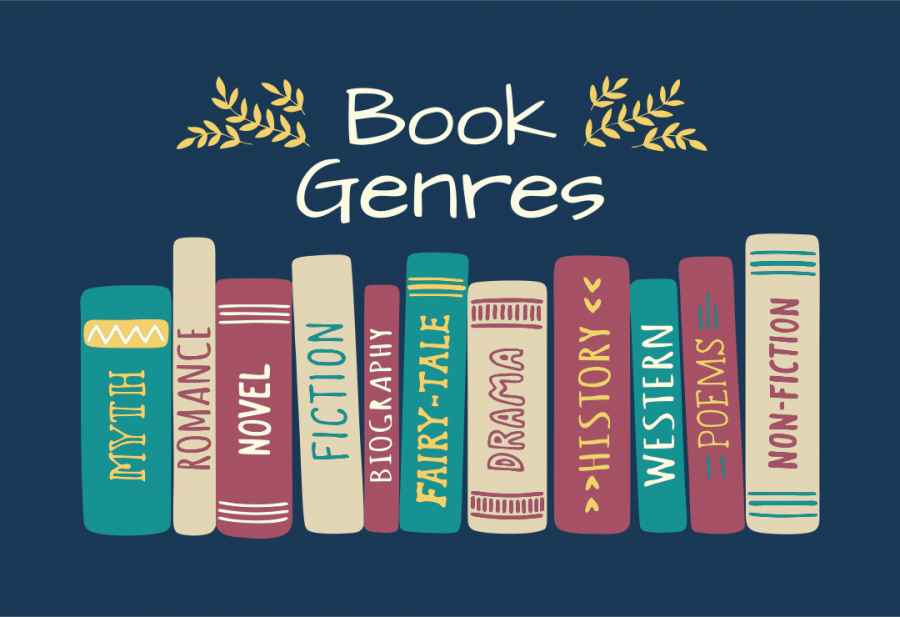
Stories come in many shapes and forms, each offering a unique way to experience the world. Whether you’re a writer looking to dive into a new genre or a reader eager to explore different worlds, the vast range of genres available can offer something for everyone.
In this post, we’ll walk you through the most popular and exciting writing genres featured on our website, from the fantastical realms of Fantasy to the thrilling twists of Mystery and everything in between. Each genre is a doorway to a new adventure, where characters, settings, and plots take on distinct shapes to captivate your imagination.
Whether you’re into high-stakes drama, light-hearted romance, or mind-bending science fiction, you’ll find inspiration and insight to fuel your creative journey or your next great read. Let’s dive into the wonderful world of storytelling genres!
Fantasy
Alternate history (what if)
This subgenre of fantasy offers a fictional account set within a real historical period, often with actual historical events included although rewritten to include some element of magic or fantasy. There are often “what if” scenarios that occur at important points in history and present outcomes that are different than what’s on the historical record.
Fantasy Comedy
– These stories are humorous and often set in fantasy worlds, and might include parodies of other more serious works. It is considered part of low fantasy (as opposed to high fantasy) but not all low fantasy is comedic in nature.
Dark fantasy
– This subgenre is the darker side of fantasy, with added elements of horror, mystery, and/or an overall feeling of dread or gloom. A common element is supernatural occurrences with a dark and brooding tone. It is often contemporary Fantasy, with the major difference being horror elements included.
Fairy tale
– This subgenre of fantasy is for stories told like fairy tales for adults or that are modern retellings of classic fairy tales. There is heavy use of motifs from fairy tale stories, particularly tropes from Grimm’s fairy tales.
Heroic fantasy
– This subgenre of fantasy contains heroic adventures in imaginary places. You will often find intricate plots and lineages in this subgenre, along with a protagonist who is often reluctant to be a champion and from humble beginnings.
Historical fantasy
– Fantasy set in a historical period, generally before the 20th century, with an added element of magic. Fantasy stories from legends focusing on Arthurian, Celtic, or Dark Ages historical timelines generally fall within this subgenre.
Mythic
– This subgenre of fantasy draws heavily from myth to create a unique blend of fantasy and folklore. It often includes gods or goddesses as characters or could be a retelling of older myths set in a fantasy world or the real world. Mythic fantasy and urban fantasy often overlap, but Mythic fantasy includes many contemporary works in non-urban settings.
Superhero
– This subgenre includes characters who have superhuman abilities. Characteristics tropes are secret identities and crime fighting. The protagonist often displays superhuman strength or special abilities, creating a juxtaposition between “normal” humans and those with “superhuman” traits.
Sword and sorcery
– This subgenre contains medieval-type adventures, with an element of romance that is often part of the story. You’re also likely to find magical characters or supernatural factors involved in the plot. Common tropes are sword-wielding heroes engaged in exciting and violent adventures, along with elements of magic and the supernatural. Distinct from high fantasy, Sword and Sorcery tales focus mainly on personal battles rather than world-endangering matters.
Young adult fantasy
– In this subgenre of fantasy, a teenager is often the protagonist. There is usually magic involved, as well as companions to help the protagonist defeat a magical foe. Common tropes are dramatic character growth, magic elements, and unexpected interactions between magical elements and the real world that influence the protagonist to become an adult.
Horror
Comedy horror
– A subgenre where the children are often under the spell of evil or are born inherently evil, and turn against the adults in the story. They then become the antagonist of the story and often must be stopped by other children or adults in order for lives to be saved.
Extreme horror
– A subgenre showing extreme and bloody violence, while focusing on gore and death. Also known as hardcore horror or splatterpunk, this genre contains stories that are the most violent, goriest, scariest ones on the market. Gore is highly detailed and nothing is left to the imagination of the reader.
Historical horror
– A story that takes place in a historical setting that includes elements of horror. These stories are often based on real-life events or historical eras, sometimes including fictional retellings of real historical figures or atrocities that occurred. The protagonist offers an alternative point of view to known history.
Lovecraftian
– A subgenre in which it is assumed aliens or otherworldly beings originally ruled our planet and will someday return to destroy all of humanity. It is fiction that emphasizes the cosmic horror of the unknown (or unknowable) more than gore or other elements of shock, and is named after American author H. P. Lovecraft (1890–1937), who was one of the first authors to explore the genre.
Man-made horror
– A subgenre of horror in which man-made creations become a source of terror. In these stories, you’ll often find apocalyptic wastelands and mad scientists, with common tropes like terrible disease, rampant pollution, and mutated animals.
Monsters
– A subgenre in which non-human creatures hunt, kill and otherwise prey on humans. These creatures could come in the form of classic monsters/ mythological monsters, neo-monsters, small creatures, aliens, giant monsters, werewolves, vampires, or zombies.
Mythic horror
– A subgenre in which ancient mythology and folklore play a large role in the story, particularly the darker, terrifying elements of it. One way in which mythic horror is distinguished from fantasy is that mythic horror often takes place in the human world as opposed to a fantastical realm.
Psychic Abilities
– A subgenre in which humans have psychic abilities. These could include reading minds, speaking with the dead, seeing the past or future, or being able to move objects telepathically. This subgenre is often referred to as paranormal horror and shares crossover tropes with science fiction. However, in science fiction, these psychic abilities are generally explored in ways that are good, while in psychic abilities horror, psychic powers are a source of terror.
Psychological horror
– In this subgenre, the character’s mind becomes his or her own undoing, such as a serial killer. These stories often involve human fears, mental instability, and emotional insecurities. Psychological horror is often similar to supernatural and haunting subgenres, because the protagonist may be confusing the horrors plaguing their mind with something supernatural. You will often encounter an unreliable narrator in this genre.
Young adult horror
– A subgenre that does not have excessive gore and usually has a teenager protagonist. It could involve monsters, violent deaths, disturbing creatures, or slight gore. There are often coming-of-age issues present, such as autonomy from adults, friendships, young romance/sexuality, and rebellion.
Mystery
Amateur sleuth
– This subgenre usually involves a non-law enforcement character without ties to a detective or sleuthing agency who tries to solve a crime that has been committed against someone close to him or her. It is a subgenre of cozy mystery.
Caper
– A subgenre in which the protagonist(s) perpetrate the crime(s). There is usually humor and cleverness involved, along with a sense of adventure. The typical caper story involves thefts, swindles, or kidnappings perpetrated by the main characters and “seen” by the reader. The police investigation attempting to prevent or solve the crimes may also be chronicled, but it is not the primary focus of the story.
Child in peril
– A subgenre of mystery in which a child is kidnapped or disappears. Often, it is the child’s parents (or other guardians) who come to the child’s rescue. There is often great focus on the parents’ anguish and loss as they play a role in finding their child. While there may be violence, it is rarely seen or very understated if toward the child.
Disabled
– A subgenre in which the detective has a disability that helps him/her solve a crime. For example, he or she might be blind, deaf, or unable to walk, but the disability helps the main character see things from a different perspective in order to solve the mystery.
Doctor detective
– A subgenre of mystery in which a physician plays the role of a detective to solve a murder or crime. In these stories, physicians apply their own specialized scientific knowledge to solve crimes that cannot otherwise be solved by police officers or detectives.
Hardboiled
– A subgenre of mystery that usually contains overtly graphic violence and sex, and is often set in an urban setting that is gritty. Slang is often used and credit for the invention of the genre is often given to Dashiell Hammett (1894–1961), a former contributor to pulp magazines.
Historical mystery
– In this subgenre, the detective is in a historical setting and must solve a crime there. Many authors of historical mysteries focus on particular eras or periods, such as Elizabethan England or Ancient China.
Howdunit
– This subgenre of mystery leaves no doubt “who” the perpetrator is. Rather, the story revolves around “how” the criminal is caught. These novels begin with the reader witnessing the murder, thus the plot revolves around how the perpetrator will be caught.
Whodunit
– A subgenre in which the perpetrator of the crime or murder is discovered at the end to be one of the least likely characters. These stories are often complex and plot driven, allowing the audience the opportunity to engage in the same process of deduction as the protagonist throughout the investigation of a crime.
Young adult mystery
– A subgenre in which a teenager is the protagonist and solves a crime or murder. Adults in these stories are generally unable to be of much help, corrupt, or ignore the help offered by the protagonist. There are often “coming of age” themes and violence is sometimes downplayed.
Others
Cultivation
– Also called “Xianxia,” meaning “immortal heroes,” it is a Chinese fantasy genre that focuses on characters who undergo meditation and training to become transcendental beings. It is often called “cultivation fantasy” by western readers.
Mecha
– A genre of Japanese literature that heavily features or focuses on mechanical innovation. Robots, cyborgs, androids, and space stations, for example, all fall under the wide umbrella of mecha; however, robots are usually the primary focus.
Martial arts
– A genre in Chinese literature that focuses on the lives and adventures of martial artists in ancient China, or a similar setting.
Slice of life
– A genre centering around normal people and the real drama that arises from everyday life.
Romance
Billionaires
– Steadily growing in popularity, this is a subgenre of romance focusing on a relationship with a wealthy and/or powerful lover. There is often an aspect of being a “Cinderella story,” and the woman is often of a lower socioeconomic class than the man.
Comedy romance
– A subgenre of romance in which laughter and fun helps the couple overcome all emotional obstacles to finding love. There is often the theme of strangers who are perfect for each other finding love, or childhood sweethearts coming back together after heartbreak and loss.
Fantasy romance
– A subgenre in which the relationship between lovers occurs in a fantasy world that contains magic (and/or magic creatures). There is often adventure that occurs and common tropes such as time travel or superhuman abilities.
Historical romance
– A subgenre set before 1950 with realistic situations occurring between lovers (based on the time period). Many stories in this subgenre are set amongst real historical events, offering a parallel viewpoint to famous historical characters from the past. Common tropes are relationships across socioeconomic statuses and within feuding families. This subgenre has also been known as “bodice rippers,” famed for the female protagonists wearing corsets.
Inspirational romance
– A subgenre of romance in which a religious or spiritual connection is an important part of a relationship. In these novels, there is a spiritual journey that the characters take that is an inherent part of their connection and romance. They can be set in any context or belief system.
Military romance
– A subgenre of romance featuring military personnel. These novels usually include some action and/or suspense, and the hero or heroine (or both) are active duty or former military personnel. The subgenre also includes stories that are set on military bases or vessels.
Paranormal romance
– In this subgenre of romance, there is often a relationship with a supernatural being, such as a vampire, werewolf, demon, shapeshifter, angel, ghost, witch or other entity. This subgenre can also include settings that are science fiction or fantasy, or any world with extraordinary elements that are magical.
Romantic suspense
– A subgenre involving suspense or mystery elements that add to the romantic plot. While the focus of these stories is on the romance itself, they contain common tropes to mystery novels such as stalkers, crimes to be solved, kidnapping, or even murder.
Science fiction romance
– A subgenre that is set in the future and often involves aliens. In many cases, there is a romantic relationship between humans and aliens. There are also common tropes that are shared with science fiction, such as technological innovation, space exploration, and living on other planets/worlds.
Young adult romance
– A subgenre focusing on young adult or adolescent love interests. A common theme is the exploration of sexuality and the obstacles of young love, such as family/socioeconomic class pressure, academic pursuits, and/or competition. There is also a broad spectrum of relationship types in these novels, such as LGBTQ relationships.
Science Fiction
Aliens
– A subgenre of science fiction in which extraterrestrial beings are encountered by humans. These encounters can range from romantic to traumatic, and common themes are communication, fear of the “other,” intergalactic war, and a greater sense of one’s place in the universe.
Alternate history/Uchronia
– In this subgenre of science fiction, the world as we know it is different due to alternate events taking place in history. There is often “what if” scenarios that occur at important points in history and present outcomes that are different than what’s on historical record.
Alternate universe
– A subgenre in which there is another reality co-existing with the present reality. These stories are typically about traveling to parallel worlds or universes that are either vastly different from our own, or very recognizable. There is a connection with this subgenre and the time travel subgenre, as well.
Apocalyptic world
– A subgenre in which a world disaster has occurred, such as a pandemic virus or nuclear holocaust. Common themes in this subgenre are community, destruction of ecosystems, pandemic viruses, survival, human nature, and dystopian societies.
Biopunk
– A subgenre of science fiction in which there is use of biotechnology, genetic manipulation, and/or eugenics that occur in the near future. The subgenre stems from cyberpunk but focuses on the implications of biotechnology rather than information technology. Common themes are bio-hackers, biotech mega-corporations, and oppressive government agencies that manipulate human DNA. The examination of bio-engineering is often a dark one.
Cyberpunk
– A subgenre of science fiction in which man and machine are combined, either literally or metaphorically, and there are multiple forms of virtual reality. The Earth is typically the setting for cyberpunk stories, but it is immersed in a cyber world. Common themes are the exploration of the relationship between humans and computers, often in a dark and bleak world, as well as cybernetics, prosthetics, cyborgs, and the internet.
Dystopia
– A subgenre of science fiction in which the world has become the opposite of a utopia and the protagonist must liberate himself/herself (or an entire community) from it. Common themes are a police state, overwhelming poverty, government control, and lack of personal freedom. Stories in this subgenre often include deep social control and exploration of what we fear will happen in the future of humanity.
Robots/A.I
– A subgenre in which there are robotics and AI. This subgenre is generally focused on one of three mentalities: pro-robot, anti-robot, or ambivalence. In a pro-robot plot, robots are benevolent. In an anti-robot plot, there is generally confrontation with robots, androids or AI. In an ambivalent plot, robots are useful but there is some anxiety about them.
Science horror
– A subgenre of science fiction in which there are also elements of horror. Often, these stories include themes such as medical research resulting in new diseases, aliens attempting to kill humans, artificial intelligence that revolts against its maker(s), or atomic bombs and technology that results in human destruction.
Space opera
– A subgenre of science fiction in which there is swashbuckling action and epic, panoramic settings. These stories often contain over-the-top characters, themes, and plots. There is usually a romantic and/or melodramatic approach to storytelling, and the plot contains a lot of adventure. The plot doesn’t always stay true to the accepted laws of science, mathematics, or the nature of space as we know it.
Thriller and Suspense
Action
– A subgenre in which there is much physical action, and the protagonist must fight for his or her survival or to save the victim of a crime or kidnapping. In many cases, the protagonist is a current or former member of the armed forces, special forces, or other government agency. Villains are often internationally located and the hunt for them often occurs across borders.
Conspiracy
– A subgenre of thriller & suspense in which a protagonist must face (and defeat) a large, powerful organization or entity to stop a killer or halt a destructive plot. These stories often have protagonists who are scholars, journalists or amateur investigators who play a role in toppling secret societies or conspiracies. Common themes are rumors, lies, propaganda, secret histories, and counter-propaganda.
Crime
– In this subgenre, the protagonist confronts a major crime plot, such as a murder, kidnapping, or theft. These stories often begin with a protagonist, who is going about his or her daily life, before becoming involved in a crime (either as a victim or helping the victim). He or she then uses wit and specialty knowledge to help solve the crime, with or without the help of authorities.
Espionage
– A subgenre in which there are secret agents. These stories are often set during war time. Often, the agent goes rogue to uncover corruption among his or her peers. Common themes include rivalries and intrigues between the major powers, corruption within modern intelligence agencies, rogue states, international criminal organizations, global terrorist networks, maritime piracy and technological sabotage.
Historical thriller/suspense
– A subgenre of thriller & suspense set in a historical time period that includes details about the era. Real historical figures are often included in the plot, or encountered through a fictional character’s point of view. These stories often concern real historical mysteries, documents, or conspiracies but offer an alternate reality connected to them. Some novels in this genre go back and forth between present-day characters and the historical events or documents they are discovering/researching.
Legal
– In this subgenre, the plot centers on legal dilemmas or courtroom dramas. The protagonist is usually an attorney who encounters danger and solves the crime, while the police are unable to do so or are corrupt. The protagonist’s life is often at peril, as is the lives of his significant others or family.
Military thriller
– A subgenre in which the protagonist is in the military (or former military) and must use his or her training to solve a mystery or crime. The subgenre also includes stories that are set on military bases or vessels. Common themes are brotherhood, avenging wrongs, protecting family members of service-members or former service-members, cartel interaction, and rogue militias.
Psychological
– A subgenre of thriller & suspense in which the protagonist becomes involved in a situation that threatens his/her sanity or mental state. These stories often emphasize the unstable or delusional psychological states of its characters, and is told through the viewpoint of psychologically stressed characters. There is a combination of tropes from mystery, drama, and action.
Religious
– A subgenre of thriller & suspense in which a religious artifact or sect-held secret is discovered, and different groups (some secret) vie for control. These stories utilize the history and myths of religion, and the protagonist generally has an in-depth knowledge or experience with religious training and/or upbringing.
Technothriller
– A subgenre in which there is cutting-edge technology that either empowers or threatens the protagonist. This is a hybrid genre drawing on tropes from science fiction, thrillers, spy fiction, and action novels. There are technical details concerning technology and the mechanics of various disciplines (espionage, martial arts, politics). There is often a focus on military action.
Western
Bounty hunters
– A subgenre of western in which there is a morally ambiguous protagonist who hunts criminals to receive a bounty. Common themes include the construction of a railroad or a telegraph line on the wild frontier, ranchers protecting their family ranch from rustlers or large landowners or who build a ranch empire, revenge stories, and outlaw gang plots.
Cattle drive
– A subgenre in which there a long journey the protagonist must make to move a herd of cattle. There are often life lessons learned along the way and friendships formed, as well as potential for romance.
Gunfighters
– A subgenre of western in which the protagonist must go up against an antagonist in gun battle. The protagonist and antagonist are often experts in pistols, and each tends to own a special weapon whose reputation precedes it. The climax of these stories is a final gun battle with specific “sportsman” rules, usually taking place in an agreed-upon setting and with a crowd watching.
Lawmen
– A subgenre of western in which the protagonist is a lawman who must help bring order to a town on the frontier. The protagonist is often escaping a violent or tragic past and has often lost family or loved ones to frontier violence. Common themes are saloon brawls, gambling, outsiders, outlaws, and romance with a local resident.
Outlaws
– A subgenre of western in which there are colorful villains. It usually involves train robberies, bank robberies, or some other form of criminal activity taking place in the West. There is a certain moral ambiguity to protagonists, making them “lovable bad guys” or villains with a heart. There is generally a romantic interest who is in a likewise unsavory career, such as a prostitute or barmaid.
Revenge
– A subgenre of western in which a protagonist endures and survives a massacre or some other horrible event, and must find those who are responsible for it to achieve justice. In many cases, the protagonist is seeking justice for loved ones or family members who have been murdered. There is a sense of righteous anger and common themes are retribution, justice, personal peace, and loyalty.
Young adult western
– A subgenre in which the protagonist is an adolescent or young adult, and comes of age as the story progresses. These stories are intended for an adolescent or young adult audience and contain themes such as friendship, young love, escape from adult or responsible influence, and rebellion.
Stay tuned for more genres!!!
Amethyst Writers.
Antie C (Soldier)
Was very helpfull